
Kenya’s Workforce Is Becoming More Global. Has Healthcare Kept Up?
By lunchtime, a Nairobi start-up founder could be pitching investors in London. By the weekend, she could be in Kigali looking for a new market. Her head of engineering works from Cape Town, although the company was built in Kilimani. A sales executive is based in Lagos. Clients are spread across several countries. The business is Kenyan. The workforce, clients and even the founder’s schedule are increasingly not.
This is no longer an unusual way to build a career or run a business. Across Africa, professionals are becoming more mobile, companies are expanding across borders and remote work is making it possible to build teams without putting everyone in the same office. The question I keep asking is whether health insurance cover has kept pace.
A Kenya that is open to a mobile workforce
Kenya has already acknowledged part of this shift. In 2024, the government introduced the Class N Digital Nomad Permit, allowing eligible foreign nationals working remotely for companies or clients outside Kenya to live in the country. The Directorate of Immigration Services describes the permit as being available for one or two years, renewable, for people employed by foreign companies, representatives of foreign businesses and self-employed professionals serving clients abroad.
Kenya wants to attract people whose working lives are not tied to one location. However, that ambition has another side. Kenyan professionals are becoming more mobile too. The scale of Kenya’s technology economy reflects this shift. TechCabal Insights reports that African start-ups raised $3.42 billion across 502 deals in 2025, a 53 per cent increase from 2024. Kenya attracted $811 million, making it one of Africa’s leading technology markets.
These are not just investment numbers. They reflect businesses hiring across borders, entering new markets and building teams that may never all sit in the same country. For healthcare, that creates a practical problem.
What happens when you need care abroad?
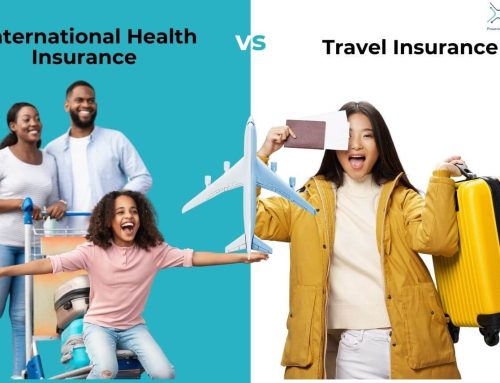
What happens when an employee travelling for business needs medical attention abroad? What happens when a founder divides her year between Nairobi, Lagos and Kigali? A medical emergency does not wait for a return flight. Neither does a serious diagnosis or the need to see a specialist. Once someone crosses a border, the healthcare system, costs, provider networks and arrangements for accessing treatment may all change. This is why Global health insurance needs a more serious look than it usually gets.
The World Health Organization (WHO) has increasingly highlighted the need for health systems to respond to mobility. Its recent work on migrant health stresses the importance of continuity of care and stronger cross-border cooperation, while WHO’s African regional office has called for health systems that can respond to the realities of increasing movement across borders.
The issue is not confined to large multinationals. A small Kenyan business may rely on a handful of key employees. If one becomes seriously ill or is injured while travelling, the consequences can extend to projects, customers and revenue. That makes healthcare protection part of a wider business-continuity conversation.
Where international medical insurance fits
International medical insurance, or IPMI (International Private Medical Insurance), is an option for internationally mobile professionals and businesses. Depending on the policy, it can provide access to private healthcare across multiple countries, international provider networks and specialist treatment. It is built for people whose lives and work cross borders and those who require a private medical scheme locally.
But it is not a universal answer. Someone who travels abroad twice a year has different needs from a founder who spends half the year outside Kenya. A ten-person company operating in three countries has different requirements from a 500-person business with offices across Africa. The starting point should therefore be the individual or business: travel patterns, family circumstances, destinations, healthcare needs, policy exclusions and budget.
That is also why I encourage people to compare private health insurance options properly, and to ask early how a plan treats pre-existing conditions, before they need to make a claim.
What employers elsewhere are already doing
Signs suggest employers elsewhere are already adapting. A 2026 Mercer Marsh Benefits survey of 188 organisations found that 96 per cent had no plans to reduce international medical benefits despite rising costs. The survey also found that 40 per cent extended international medical benefits to local nationals, suggesting that such cover is moving beyond the traditional expatriate model. I believe Kenya should pay attention to that shift.
Protecting the people powering Kenya’s economy
As Nairobi strengthens its position as a technology and business hub, the infrastructure supporting that ambition cannot stop at offices, connectivity and investment capital. It must also consider the people who make those businesses work. For the founder travelling to Kigali, the consultant working in Lagos, the remote professional moving between African cities and the start-up employing people in several markets, healthcare should not become an afterthought simply because the workplace has moved. Kenya is building an economy that increasingly crosses borders. Its approach to protecting the people powering that economy should do the same.
Thinking about cover for yourself, your family or your team? Speak to the EHS team, and we’ll help you work out what fits your travel, your needs and your budget.